Anxiety rarely announces itself politely. It shows up at 3am, grips your chest before a social plan, or turns a normal Tuesday into a loop of overthinking. So when people ask, can mushrooms help anxiety, they are usually not asking out of casual curiosity. They are asking because the usual routes have not felt like enough, and they want something that reaches deeper than symptom management.
That question deserves a straight answer. Mushrooms may help some people with anxiety, but it depends very much on which mushrooms you mean, why the anxiety is happening, the dose, the setting, and the person taking them. There is promise here, especially around psilocybin in carefully controlled conditions, but there are also limits, risks, and a lot of hype that can cloud good judgement.
Can mushrooms help anxiety in real life?
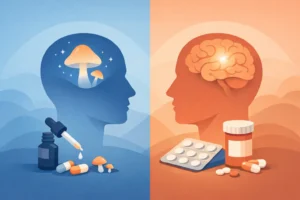
There are really two different conversations hiding inside the same phrase. One is about functional mushrooms such as reishi or lion’s mane, which are typically used as supplements and do not produce psychedelic effects. The other is about psilocybin mushrooms, which can alter perception, mood, and sense of self in ways that some people describe as healing, confronting, or life-changing.
Those two categories should not be lumped together. Functional mushrooms are generally marketed for stress support, sleep, focus, or overall balance. Psilocybin mushrooms are sought for more profound shifts in perspective, emotional processing, and, in some cases, relief from entrenched anxiety patterns. If you are asking whether mushrooms can soften the constant mental static, the answer changes depending on which path you are considering.
What the research says about psilocybin and anxiety
Psilocybin has attracted serious attention because early clinical studies suggest it may reduce anxiety for some people, particularly when the anxiety is tied to depression, existential distress, or rigid negative thought loops. In research settings, the experience is structured. People are screened carefully, prepared beforehand, and supported throughout. That is not a small detail. It is part of why outcomes can differ so sharply from unguided use.
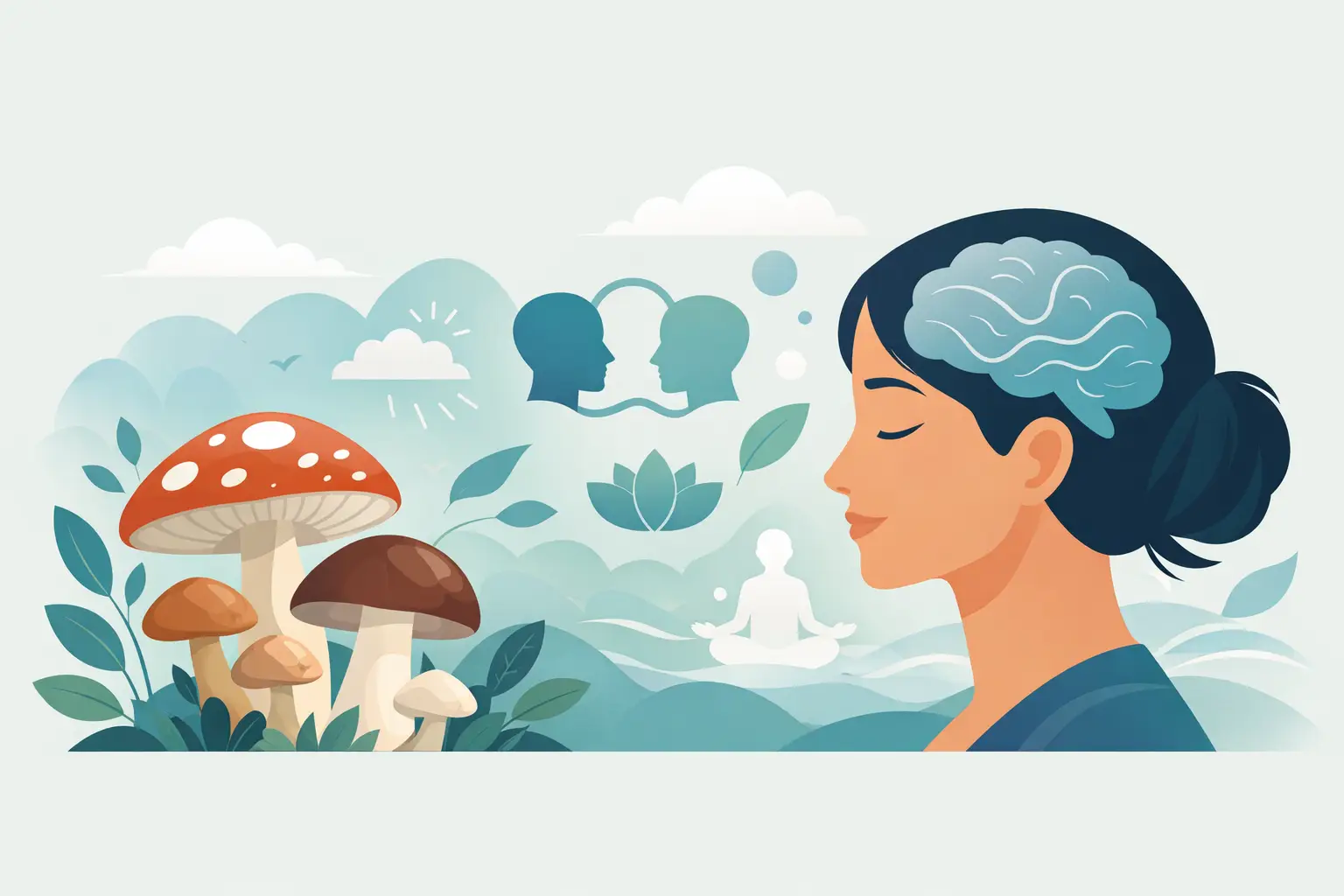
What seems to matter is not simply the chemical itself, but the combination of the medicine, the mindset, and the environment. Many people report that psilocybin allows them to step outside their usual story for a while. That can create space – space to feel grief without being swallowed by it, to observe fear instead of obeying it, or to reconnect with a sense of meaning that anxiety has been eroding.
But this is not magic, and it is not automatic. For some, a psychedelic experience can bring anxiety right to the surface before any relief appears. That can feel cleansing in the right setting, yet overwhelming in the wrong one. If somebody already feels fragile, panicky, or unsafe, an intense trip can amplify the exact state they were hoping to escape.
Why some people feel calmer after mushrooms
Anxiety often thrives on repetition. Same thoughts, same fears, same protective habits. One reason psilocybin is so compelling is that it may interrupt those loops. People often describe a loosening of the mind’s usual grip – less clinging, less rehearsing, less internal warfare.
That does not mean every difficult feeling disappears. It means the relationship to those feelings may shift. Someone who has been trapped in self-criticism might suddenly feel compassion. Someone paralysed by uncertainty might feel acceptance. For others, the experience is not soft at all. It can be raw, emotional, even spiritually confrontational. Yet that confrontation, when handled well, is sometimes exactly what leads to relief.
This is where the transformational language around psychedelics comes from. The journey within is not always gentle, but it can be clarifying. For people tired of numbing, controlling, and pretending, that can feel like a different class of healing.
Can microdosing mushrooms help anxiety?
Microdosing has become the more everyday version of the question. Rather than taking a full psychedelic dose, people use sub-perceptual or barely perceptible amounts in the hope of improving mood, resilience, creativity, or emotional steadiness while carrying on with ordinary life.
Some users say microdosing helps take the edge off social anxiety, reduces mental clutter, and makes them feel more present. Others notice no change at all, or feel more activated and unsettled. That split matters. Anxiety is not one thing, and microdosing is not one effect.
If someone is already prone to agitation, racing thoughts, or body-based panic, even a small amount may feel too stimulating. On the other hand, if their anxiety is tied to low mood, emotional flatness, or feeling disconnected from life, they may find a subtle lift genuinely useful. The current evidence is still developing, so personal reports have raced ahead of hard conclusions.
This is where self-honesty matters more than slogans. Microdosing is not about taking random amounts and hoping for transcendence between errands. It works, if it works at all, through consistency, restraint, and careful observation.
What about non-psychedelic mushrooms?
When people ask can mushrooms help anxiety, they may also be talking about reishi, lion’s mane, cordyceps, or blends sold for calm and balance. These mushrooms are not going to produce a psychedelic breakthrough, but they may support general wellbeing in indirect ways.
Reishi is often associated with relaxation and sleep support. If anxiety is worsened by poor sleep, that may matter. Lion’s mane is more often discussed for cognition and nerve support, though some people feel mentally steadier when brain fog lifts. The effect here is usually gentler and slower. Think support rather than revelation.
That said, marketing around functional mushrooms can get breathless. They are not a cure for severe anxiety, trauma, or panic disorder. They may be part of a broader routine, but they are unlikely to replace proper care where that is needed.
The trade-offs nobody should ignore
Psychedelics attract people because they offer something many mainstream options do not – a sense of possibility. A shift. A crack in the wall. But anxiety can also make people vulnerable to overpromises, and that is where clarity matters.
Psilocybin is not suitable for everyone. People with a personal or family history of psychosis or certain serious mental health conditions should be especially cautious. The same goes for anyone in a chaotic life situation, because set and setting are not wellness clichés. They are the difference between a constructive experience and a destabilising one.
There is also the simple fact that a mushroom experience can be psychologically intense. If somebody wants instant calm in the way they might expect from a sedative, psilocybin may not deliver that at all. It can increase emotional intensity before it brings insight. Sometimes that is therapeutic. Sometimes it is just too much.
Even functional mushrooms have trade-offs. Quality varies. Effects can be subtle. Expectations can outrun reality. If someone is hoping a capsule will erase years of anxious patterning, they may end up disappointed.
If you are considering mushrooms for anxiety
Start by getting precise about what you mean by anxiety. Is it chronic worry, social fear, panic, low mood with anxious edges, burnout, existential dread, or trauma-related hypervigilance? Different patterns respond differently, and that should shape how you think about support.
Then be honest about what you want. Do you want a gentle daily nudge, or are you looking for a deeper psychological reset? Functional mushrooms and psilocybin sit in very different lanes. Confusing them leads to poor decisions.
If psilocybin is on your mind, preparation matters. So does dosage. So does who is with you, where you are, and whether you have space to process what comes up afterwards. The medicine may open the door, but integration is what helps the shift stay useful once ordinary life returns.
That is one reason experienced psychonauts and wellness seekers alike keep coming back to the same truth: the compound is only part of the experience. The rest is intention, environment, and respect.
So, can mushrooms help anxiety?
Yes, they can help some people. No, they are not a universal fix. Psilocybin may offer meaningful relief by disrupting rigid thought patterns and opening a deeper emotional process, especially when approached with care. Functional mushrooms may offer milder support around sleep, stress, and general balance. Both paths have potential. Both have limits.
The real opportunity is not chasing a miracle. It is choosing a path that matches your nervous system, your goals, and your tolerance for intensity. For some, that means a grounded, gradual approach. For others, it means a more radical inner reckoning. If you are walking that line with intention rather than impulse, you are already closer to the kind of relief that lasts.