
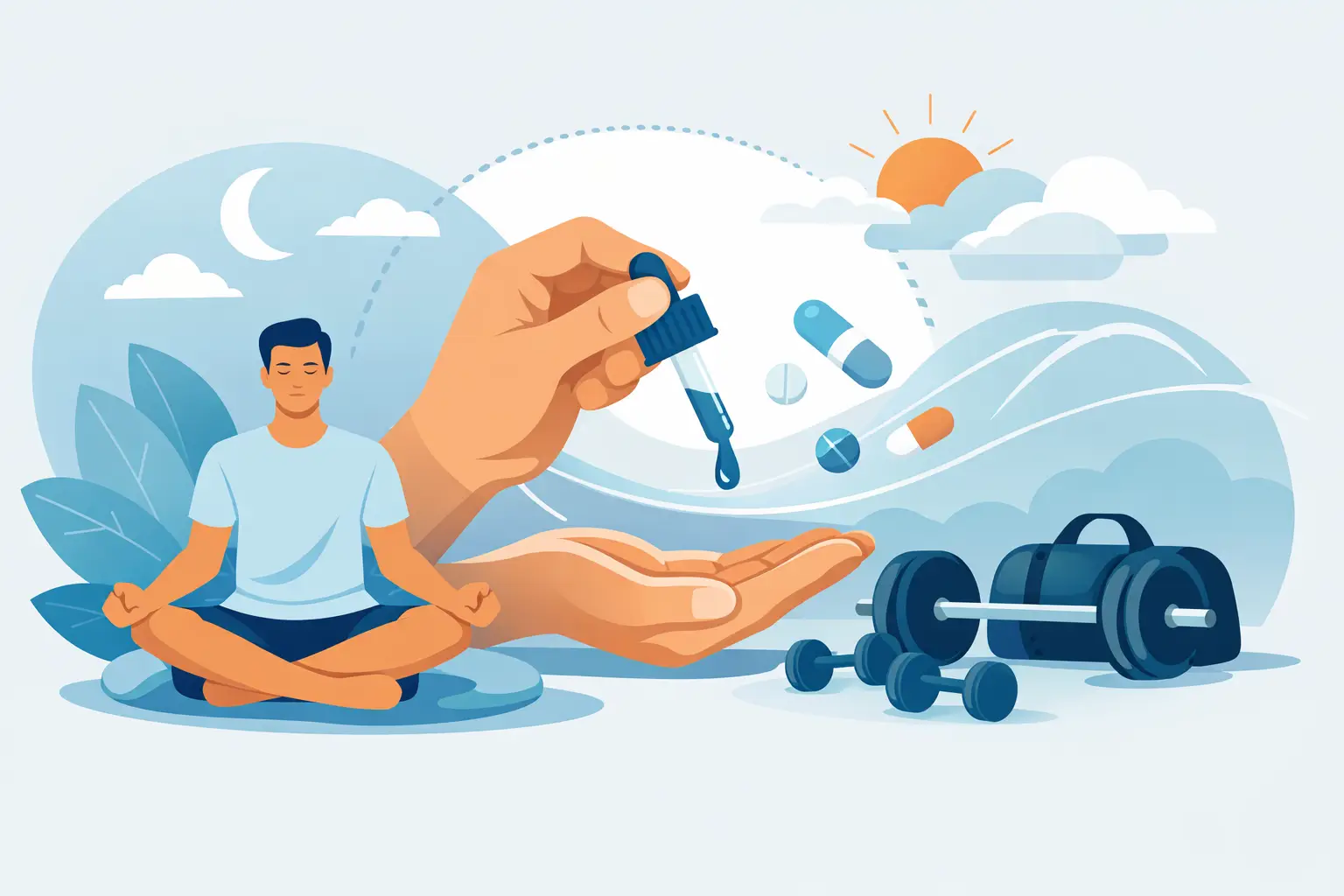
Some people feel brilliant on a microdosing protocol until a rest day lands and everything gets murky. Do you leave it alone and trust the process, or bend the rules because your focus, mood, or momentum feels flatter than expected? If you are wondering how to microdose on rest days, the first truth is simple – a rest day is usually not a failed day. It is part of the rhythm.
That matters more than most beginners realise. Microdosing is not meant to feel like chasing a constant lift. It is meant to create space for change, reflection, and nervous system balance over time. The off days often show you whether your routine is genuinely helping or whether you have started leaning on the dose itself.
How to microdose on rest days without ruining your protocol
Let us get straight to it. In most established microdosing approaches, you do not actually dose on rest days. You rest. That is the point. The phrase how to microdose on rest days can be a bit misleading because, for many people, the smarter move is learning how to handle rest days well rather than squeezing in extra material.
If you are following a common schedule such as one day on and two days off, or a more customised cycle, your rest days are where integration happens. Mood patterns settle. Sleep can normalise. You get a cleaner read on whether your baseline is shifting. If you dose again too soon, especially because you want to smooth out discomfort, you can blur those signals and creep towards tolerance.
Still, it depends on what you mean by rest day. Some people use the term for a complete off day. Others mean a lower-dose day, a transition day, or a day where they support the process with breathwork, journalling, walking, meditation, or gentle ceremony without taking anything psychoactive. That distinction matters.
A proper rest day is usually best treated as medicine without the substance. Keep the structure, keep the intention, and drop the dose.
What a rest day is really doing for you
The strongest protocols are not built on endless stimulation. They are built on contrast. A dosing day may sharpen perception, soften rigid thought loops, or help you feel more emotionally available. A rest day lets you see what remains once the immediate effect has passed.
That is where the real signal lives.
If your rest days are always chaotic, exhausted, or emotionally raw, that does not automatically mean the protocol is wrong. It may mean the dose is a touch high, the schedule is too frequent, your sleep is off, or you are expecting microdosing to carry too much weight. Psychedelics can support a shift. They do not replace nutrition, rest, relationships, boundaries, or mental health care.
For wellness-focused users, this can be a hard pill to swallow. The journey within sounds thrilling when everything feels expansive. It sounds less glamorous when a Tuesday off day reveals you are still burnt out, still scattered, or still avoiding difficult conversations. But that honesty is useful. A rest day strips away some of the glow and shows you your actual terrain.
Should you ever take a tiny dose on a rest day?
Sometimes people ask this because they are trying to fix a protocol that is not landing well. Sometimes they ask because they want consistency in energy, confidence, or mood. And sometimes, if we are honest, they simply do not want to feel the dip.
In most cases, taking a dose on a planned rest day is not the first adjustment to make. It is usually better to review the basics. Was your previous dose too strong? Are you taking it too often? Have you slept properly? Are you overstimulated, underfed, or dehydrated? Have you stacked too many expectations on a tiny amount?
There are edge cases. Experienced users who track their responses carefully may experiment with schedule changes rather than rigidly following someone else’s pattern. A person doing one day on, two off might shift to every other day for a limited period, then reassess. Another might lower the dose and increase spacing. But that is not really microdosing on rest days. That is redesigning the protocol.
The risk of casually topping up on off days is that your rest days stop being rest days. Over time, you can flatten the contrast, build tolerance faster, and end up less certain about what is helping.
How to handle difficult rest days
A difficult rest day does not always mean something has gone wrong. It may mean your body is asking for less stimulation and more care. It may also mean you are meeting emotions that were muted before. That can feel uncomfortable, but discomfort and harm are not the same thing.
Start with your environment. Keep the day lighter if you can. If you know your off days tend to feel fragile, do not cram them with high-stakes meetings, emotional confrontations, and three coffees before noon. Build in steadiness. Water, proper food, daylight, movement, and reduced noise can do more than people expect.
Then look at your rituals. A lot of people treat dosing days as sacred and rest days as random. Flip that. On rest days, journal briefly, track mood, note sleep quality, and pay attention to body tension. Even ten quiet minutes can help you tell the difference between a protocol issue and ordinary life stress.
If your mind feels flat, resist the urge to label the day as wasted. Not every day needs to feel lifted to be useful. Some of the deepest change comes from noticing that you can tolerate an ordinary day without immediately reaching for another push.
Signs your protocol may need adjusting
There is a difference between a healthy rest day and a protocol that keeps missing the mark. If your off days consistently bring headaches, irritability, brain fog, anxiety spikes, or a mini-crash that feels disproportionate, step back and assess.
Often the first lever is dose size. A true microdose should stay below the threshold of obvious intoxication. If you feel noticeably altered, socially strange, or physically overactivated on dose days, your rest days may hit harder because the contrast is too steep.
The second lever is frequency. More is not automatically better. Plenty of people do well with fewer sessions and more recovery time. The third is intention. If you started because you wanted long-term relief for low mood, emotional heaviness, or creative stagnation, measure the protocol against those outcomes over weeks, not against whether every single off day feels golden.
This is where disciplined experimentation matters more than hype. Bold transformation is possible, but it is rarely built through impatience.
How to microdose on rest days if you mean support, not dosing
If what you really want is to stay connected to the process on non-dose days, there are cleaner ways to do it. Think of rest days as integration days. You are still in the work. You are simply not adding another psychoactive layer.
That might mean a longer walk without your phone, quiet music, breathwork, stretching, or writing down what surfaced on the last dose day. It might mean therapy, honest conversation, or simply getting to bed on time. Countercultural healing is not just about what you take. It is also about what you stop outrunning.
For some people, rest days are where confidence grows. You realise you can carry more clarity into ordinary life than you thought. For others, rest days reveal the need for a gentler schedule. Both are valuable.
If you are building a longer protocol, whether for mood support, perspective shifts, or inner recalibration, let the off days teach you something. They show whether the benefits are integrating into your baseline or evaporating the moment the dose is gone.
A smarter mindset for long-term results
The most grounded answer to how to microdose on rest days is usually this: do not force the day to be something it is not. Respect the pause. Keep observing. Adjust only when there is a pattern, not because one quieter day made you doubt the process.
That is not boring advice. It is powerful advice. People chasing a miracle often skip the part where healing looks repetitive, patient, and sometimes inconvenient. Yet that is where the strongest shifts often begin.
If you choose to explore psychedelics as tools for focus, mood, ritual, or self-inquiry, take your rest days seriously. They are not dead space between the interesting parts. They are part of the medicine. Even brands like Lysericmeds.shop speak to transformation, but real transformation is not built by dosing at every wobble. It is built by learning when to act, when to pause, and when to trust your own read of the journey.
Give the rest day room to do its work. Sometimes the breakthrough is not in taking more. Sometimes it is in noticing you no longer need to.