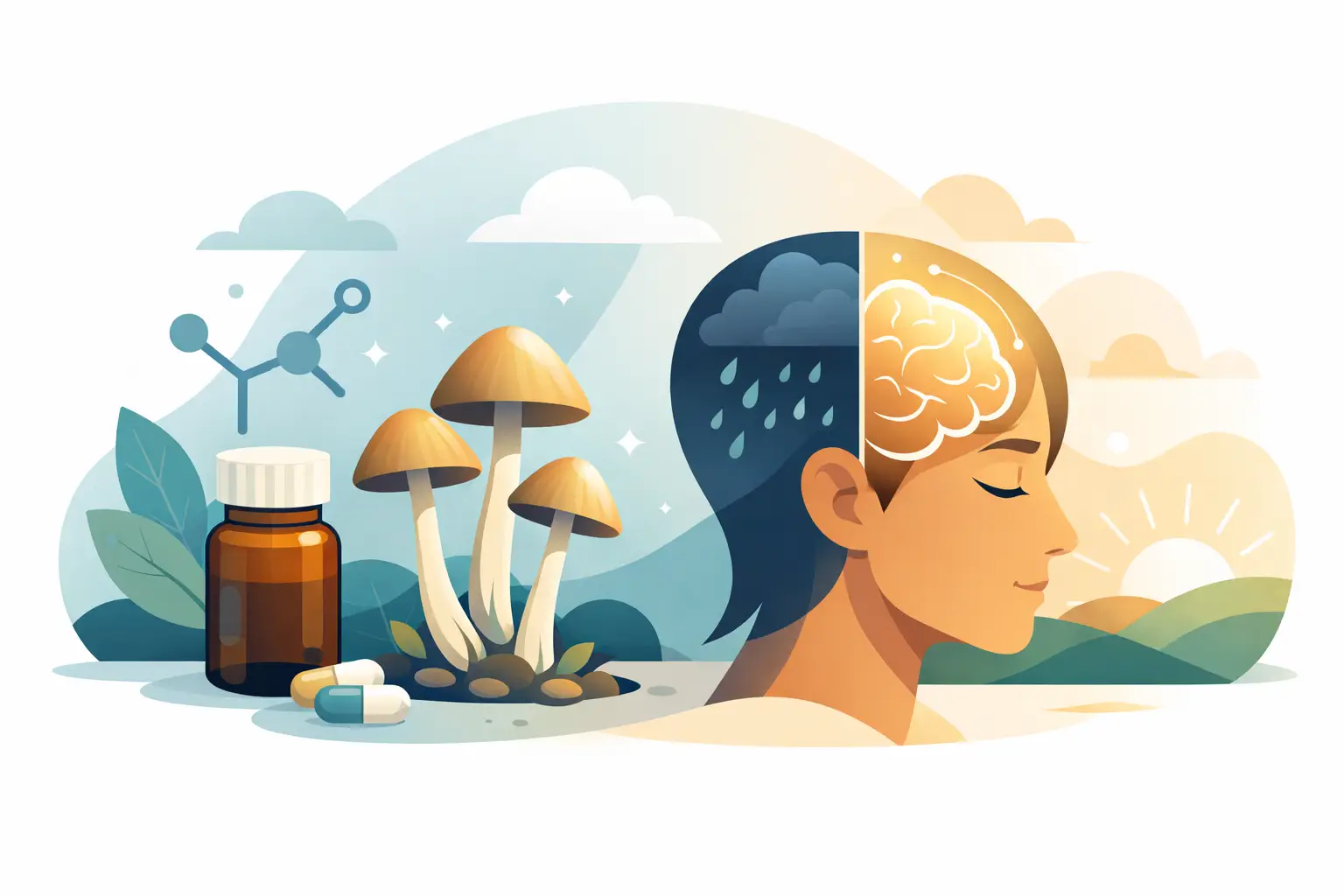
Depression rarely arrives as a dramatic collapse. More often, it feels like the same grey loop on repeat – flat mornings, blunted motivation, a mind that will not let go of the heaviest thought in the room. That is why psilocybin microdosing for depression has pulled so much attention. For many people, the appeal is not escapism. It is the hope of feeling like themselves again, without being flattened, numbed, or pushed further from their own inner signal.
There is a reason this conversation has moved from fringe circles into mainstream mental health debates. People are tired of one-size-fits-all answers. They want options that feel more personal, more conscious, and more connected to healing rather than simple symptom control. Microdosing sits right in that space – part ritual, part experiment, part rebellion against the idea that relief must always come in a standard pharmaceutical package.
What psilocybin microdosing for depression actually means
Microdosing usually refers to taking a very small amount of psilocybin, often low enough to avoid a full psychedelic trip. The goal is not to hallucinate or leave reality behind. The goal is subtler – shifts in mood, mental flexibility, emotional openness, focus, and a softer relationship with negative thought patterns.
For people dealing with depression, that distinction matters. A full journey can be profound, but it also demands time, preparation, and emotional capacity. Microdosing is attractive because it appears more compatible with ordinary life. People want to work, create, socialise, parent, and still explore a different route to feeling better.
That said, the word “microdose” can create false certainty. There is no single universal amount, no guaranteed outcome, and no magic schedule that works for everybody. Body weight, sensitivity, mushroom potency, existing mental health conditions, and current medications all change the picture.
Why people are drawn to it
The pull is easy to understand. Depression often narrows the world. Thoughts become repetitive. Emotions become sticky. Small tasks feel heavy. Many people who explore microdosing are looking for a slight but meaningful shift – more energy to get out of bed, more patience, more access to pleasure, more room between themselves and despair.
Some describe the effects as a gentle lift. Others talk about a change in perspective rather than mood alone. They may feel less trapped in the same internal script. A difficult day still feels difficult, but not completely inescapable. That difference can matter a great deal.
There is also the spiritual side of the appeal, and it should not be dismissed. For a certain kind of seeker, healing is not purely chemical. It is about reconnecting with self, breaking stale patterns, and returning to a sense of meaning. Psilocybin carries that symbolic weight. It is not sold only as a substance. It is pursued as a doorway.
What the evidence says – and what it does not
The conversation around psilocybin and depression is real, but it is also messy. Research into full-dose psilocybin-assisted therapy has shown promising signals for treatment-resistant depression and major depressive symptoms in some settings. That is one reason public interest has surged.
Microdosing, though, is less settled. Some users report better mood, sharper focus, reduced rumination, and improved emotional balance. Some observational studies suggest perceived benefits. But placebo effects are difficult to rule out, and controlled evidence remains limited.
That does not mean microdosing is useless. It means honesty matters. If someone tells you psilocybin microdosing for depression is a guaranteed fix, they are selling fantasy. If someone tells you it is all nonsense because the science is still emerging, they are oversimplifying the lived experience of thousands of people who feel genuine change. The truth sits in the middle. There is promise here, but promise is not proof.
The trade-offs people do not always talk about
Microdosing has a polished reputation because it sounds gentle. But gentle is not the same as risk-free. Even low doses can stir anxiety, irritability, restlessness, or emotional sensitivity in some people. If your nervous system is already stretched thin, a small amount may feel less like clarity and more like overstimulation.
There is also the question of expectations. Depression can make any new approach feel loaded with hope. That hope is understandable, but it can become a trap. If somebody expects a dramatic turnaround from a sub-perceptual dose, disappointment may land hard. Microdosing tends to be about subtle shifts, not cinematic breakthroughs.
Another issue is inconsistency. Mushroom potency can vary between strains, batches, and storage conditions. That makes precision difficult unless a person is highly organised and cautious. What felt light one week may feel stronger the next.
People with a history of psychosis, bipolar disorder, or severe instability need to be especially careful. Psychedelics are not neutral tools. They can amplify what is already present. For some, that may mean opening a path through emotional numbness. For others, it may mean tipping into something far less manageable.
How people approach a microdosing routine
Most people experimenting with microdosing do not take it every day. They follow a pattern that includes rest days, partly to observe changes clearly and partly to avoid building tolerance too quickly. The exact structure varies, and that is where personal experimentation often enters.
The smarter approach is usually the slower one. Start low. Track mood, sleep, appetite, anxiety, focus, and social energy. Pay attention to whether the effect is actually supportive or merely novel. What matters is not whether you feel something unusual. What matters is whether your life feels more workable.
Set and setting still count, even with small amounts. If you are taking psilocybin in the middle of chaos, poor sleep, heavy alcohol use, or emotional crisis, the signal becomes muddy. Microdosing works best when it is part of a wider framework of care – decent rest, some structure, less self-neglect, and at least a basic willingness to reflect.
That is where intention separates casual use from conscious use. The question is not simply, “Did I take it?” The question is, “What am I changing around this experience, and how am I listening to myself while I do it?”
Psilocybin microdosing for depression versus conventional routes
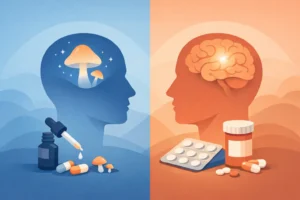
This is not a simple either-or. Some people come to microdosing after years on antidepressants. Others are still using conventional treatment and are curious about alternatives. Some want a path that feels less clinical and more aligned with self-inquiry. Others simply want relief from the deadening side effects they have experienced elsewhere.
Traditional antidepressants can be life-saving. Therapy can be life-changing. Lifestyle work can make a serious difference. Psychedelic practice does not erase that. What it offers, for some, is a different doorway – one that may feel more experiential, more embodied, and more connected to a sense of inner movement.
But there are tensions here. Combining psilocybin with certain medications may blunt effects or create uncertainty. Stopping prescribed treatment abruptly in order to chase a psychedelic solution is rarely a wise move. The rebellious route can still require discipline.
Why sourcing and mindset matter
If someone is exploring this space, quality matters. So does trust. Depression already makes discernment harder. The last thing anybody needs is guesswork around potency, strain, or product handling. A serious microdosing practice begins long before the first dose. It starts with sourcing, preparation, and honesty about why you are doing it.
For people who want a more intentional route into this world, platforms such as Lysericmeds.shop position the experience as more than a transaction. That framing appeals to buyers who are not just collecting substances, but building a personal ritual around mood support, self-exploration, and long-term change. The attraction is obvious – access paired with a feeling of direction.
Still, the strongest ritual is the one grounded in self-awareness. If microdosing becomes another way to avoid deeper pain, it may disappoint. If it becomes part of a broader healing practice, the results may feel more meaningful.
What a realistic expectation looks like
A realistic expectation is not bliss. It is not permanent relief. It is not becoming a new person by next Tuesday. It may be a little more lightness, a little less mental drag, a little more access to motivation and emotional flow.
That may sound modest, but depression feeds on small collapses. It steals momentum first. Then it steals hope. If microdosing helps restore even a fraction of movement, many people will consider that significant.
The key is to stay awake to your own response. Some people feel opened up. Some feel nothing much at all. Some discover that a larger, properly held psychedelic experience makes more sense than repeated tiny doses. Some decide the practice is not for them, and that clarity has value too.
If you are drawn to psilocybin microdosing for depression, the real work is not chasing hype. It is paying close attention to what genuinely helps you return to yourself, with more steadiness, more honesty, and a little more room to breathe.