The room can look perfect and still feel wrong. The dose can be modest and still hit hard. That is why set and setting for mushrooms is not some soft extra for beginners – it is the frame that shapes whether a trip feels healing, chaotic, revealing or simply too much.
If you are serious about psilocybin, you need to think beyond strain names and grams. Mushrooms tend to amplify what is already moving through you and what is already present around you. Get the inner state wrong, or the environment wrong, and even a promising journey can turn jagged. Get both right, and the experience often feels cleaner, deeper and far more useful.
What set and setting for mushrooms actually means
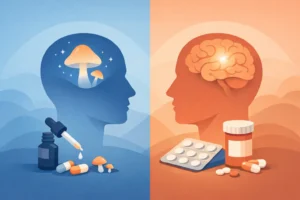
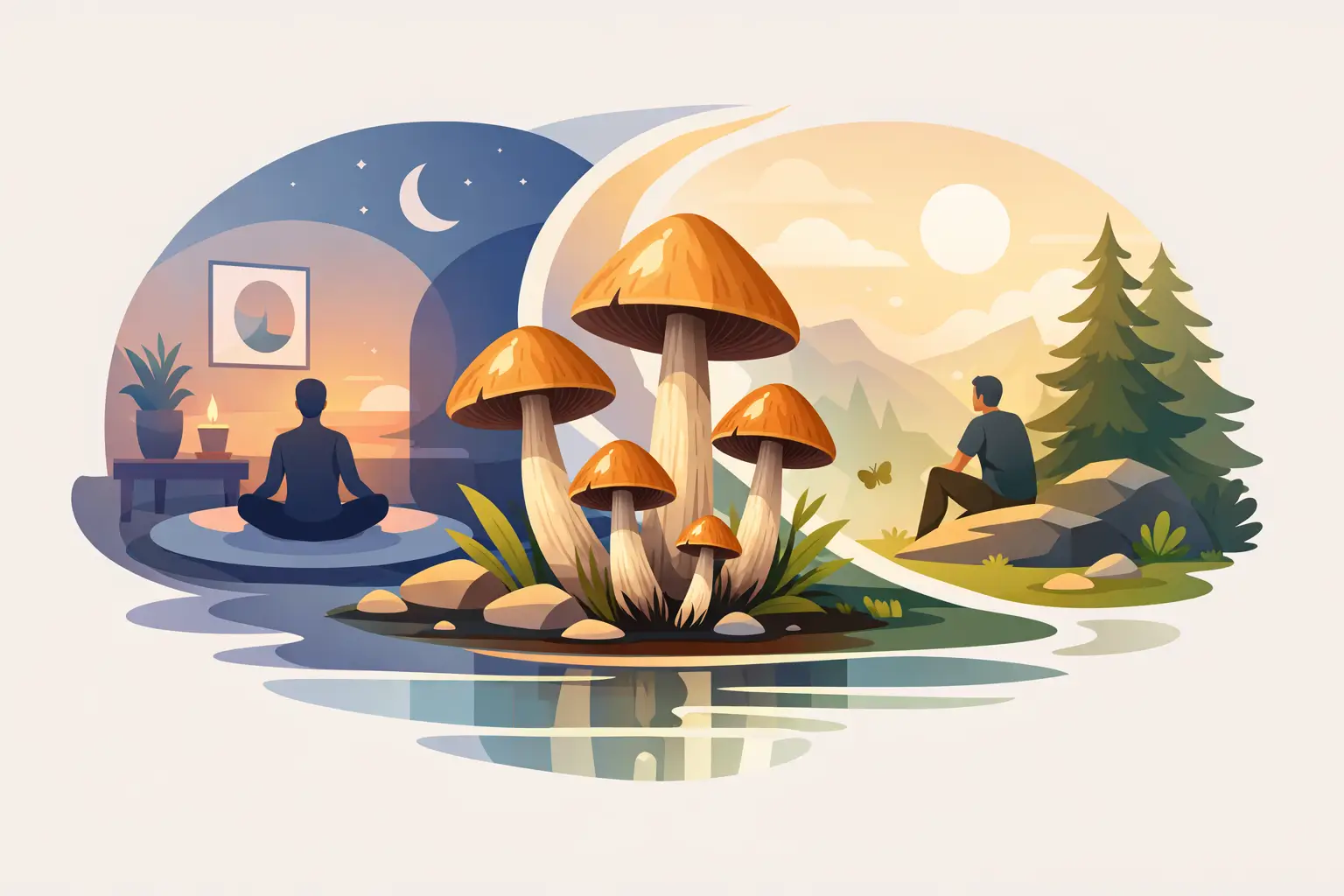
Set is your internal landscape. It includes your mood, expectations, stress level, recent life events, physical comfort and the stories you are bringing into the experience. If you are carrying grief, panic, resentment or exhaustion, mushrooms may not politely stay out of it. They often put a spotlight on it.
Setting is the outer environment. That means the room, the lighting, the noise level, the people around you, the time pressure, the weather if you are outside, and whether you feel genuinely safe. It also includes practical details that seem boring until they matter – your mobile phone buzzing, a flatmate walking in, or the sense that you might need to perform normality when you are in no state to do so.
People often talk about dosage first because it feels measurable. Fair enough. But dosage does not operate in a vacuum. A moderate amount in a tense environment can feel rougher than a higher amount in a calm, grounded space. That is the trade-off many people miss.
Why mindset can make or break the trip
Mushrooms are not machines. They do not produce the same emotional result every time just because the amount is similar. Your mindset going in changes the character of the experience.
That does not mean you need to feel perfect before taking psilocybin. Plenty of people turn to mushrooms during periods of emotional strain or personal transition. But there is a difference between entering a journey with honest intention and entering it in total internal disorder. If you are spiralling, sleep deprived, furious after an argument, or trying to blot out pain at any cost, the experience can become less therapeutic and more destabilising.
A better question is not, “Am I in a good mood?” but, “Am I resourced enough to meet what comes up?” That shift matters. Calm curiosity is usually more workable than forced positivity. If the goal is inner work, go in ready to feel, not ready to control.
Intentions help here, but they should stay light. You can enter with a direction – clarity, grief release, perspective, self-inquiry – without demanding a specific revelation on your schedule. Mushrooms do not like being managed too tightly.
Useful pre-trip check-ins
Before a session, pause and ask yourself whether your body feels nourished, whether you have had enough sleep, and whether there is any unresolved stress likely to erupt once the effects build. If the answer is yes, postponing is not weakness. It is intelligent timing.
This is especially true if you are using mushrooms for emotional reset rather than pure recreation. Healing work asks for honesty. If your nervous system is already overloaded, a gentler day may serve you better than pushing through because the weekend is free.
The setting matters more than people think
There is a reason experienced psychonauts keep returning to the same basics. A private, comfortable, interruption-free environment is not glamorous, but it works.
For many people, the best setting is a familiar indoor space with soft light, easy access to water, blankets, music and a toilet nearby. Not because mushrooms are only for staying indoors, but because certainty reduces unnecessary friction. When your perception shifts, ordinary tasks can suddenly feel absurdly complex.
Nature can be beautiful, but it is not automatically the better option. A peaceful garden or secluded countryside spot may feel expansive. A busy park, public footpath or unpredictable woodland can become stressful fast. The difference lies in privacy and control. If there is any realistic chance of dealing with strangers, noise or sudden logistics, think twice.
If you are tripping with others, choose companions carefully. The wrong person can contaminate the whole atmosphere. You want people who are calm, non-competitive, emotionally steady and not likely to push the energy in a performative direction. There is a big difference between shared ceremony and a room full of people chasing intensity.
Music, lighting and sensory input
Small details carry surprising weight. Harsh lights can feel invasive. Loud, chaotic playlists can steer the trip into agitation. Constant notifications can break trust with the space.
Simple usually wins. Warm lighting, comfortable clothing, and music that supports rather than dominates tend to create a better container. Some people want silence for inward depth. Others find gentle instrumental music helps them surrender. It depends on your temperament, but whatever you choose should feel deliberate, not accidental.
Social setting and the sitter question
Not every mushroom session needs a sitter, but some absolutely do. If you are inexperienced, taking a stronger dose, processing heavy personal material, or prone to anxiety, having a sober, trusted person nearby can make the difference between panic and reassurance.
The sitter does not need to act like a therapist. They need to be calm, discreet and grounded. The best trip sitters do very little. They protect the space, reduce practical stress and remind you that the experience will pass.
If you are with a partner or friend who is also dosing, be realistic about what that means. Mutual support sounds lovely in theory, but if both of you are deep in the experience, neither may be truly available if things get messy. That does not make group work bad. It just means the setup should match the dose and the emotional stakes.
Timing is part of set and setting for mushrooms
People rarely give timing enough respect. Yet it shapes everything.
Start too late in the evening and you may end up battling fatigue, disrupted sleep or that stale, stretched feeling that arrives when a journey outlasts your energy. Dose on a day packed with obligations and the trip can carry a low hum of pressure from the start. Even the season can matter. A cold, dark winter afternoon creates a different mood from a bright summer morning.
Good timing means space before, during and after. You want a day that does not demand performance. No awkward calls. No errands. No need to suddenly become socially polished halfway through. The best journeys happen when you can surrender without one part of your mind checking the clock.
Integration belongs here too. If you plan a mushroom session, plan the landing. A quiet evening, gentle food, rest and room for reflection are part of the setting, not an afterthought.
What people get wrong about control
A lot of difficult trips start with resistance. The person wants insight, beauty and emotional release, but only in acceptable forms. Then the mushrooms begin peeling back layers they did not intend to face.
This is where set and setting for mushrooms becomes a form of respect. You are not trying to engineer a flawless experience. You are creating conditions where intensity can unfold without turning unsafe or pointless.
That means accepting some uncertainty. It also means knowing when not to proceed. If the environment is unstable, if your mental state feels brittle, or if the whole plan is built around impulse, the bravest move may be to wait.
For those seeking a more intentional path, whether that means ceremony, self-inquiry or microdosing as part of a wider rhythm, preparation is part of the medicine. The product matters, of course. So does the container around it. That is one reason some people gravitate towards spaces like Lysericmeds.shop – not just for access, but for a more purposeful frame around the journey within.
The strongest trips are not always the loudest
There is a commercial myth around psychedelics that bigger is deeper and more extreme is more meaningful. That mindset sells stories, but it does not always deliver wisdom.
Often, the most transformative mushroom experiences are the ones built with care. The room is right. The company is right. The intention is honest. The dose fits the moment. There is enough surrender to let the trip move, and enough structure to keep it from becoming needless chaos.
That is the real power of set and setting. Not decoration. Not ritual for its own sake. It is the difference between rolling the dice and creating a space where mushrooms have a genuine chance to show you something worth keeping.
If you want the journey to give back, treat the conditions as part of the dose.