If you are weighing microdosing vs antidepressants, you are probably not chasing a theory. You want to feel more like yourself again, think more clearly, get through the day without that heavy emotional drag, and find an option that does not flatten your inner world in the process. That is where this conversation gets real.
For many people, antidepressants are the first thing offered when mood drops, anxiety spirals, or life starts to feel mechanically grey. For others, microdosing has become the alternative path – quieter, more self-directed, and tied to the idea that healing does not always have to mean numbing. That does not make one automatically better than the other. It means the trade-offs matter.
Microdosing vs antidepressants: the core difference
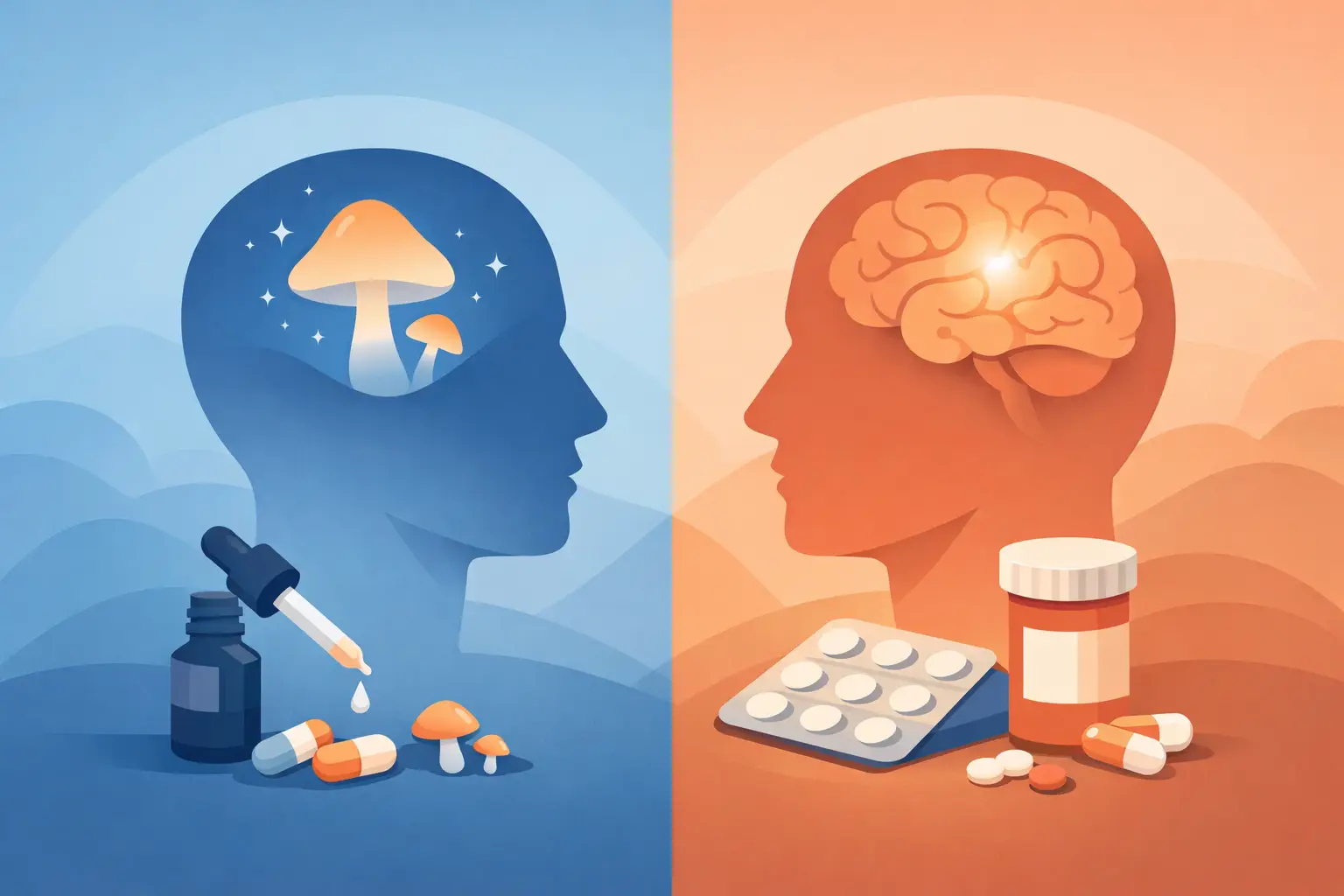
The clearest difference is philosophical as much as practical. Antidepressants are designed to regulate symptoms through ongoing pharmacological support, usually by affecting serotonin or other neurotransmitters over time. Microdosing, by contrast, is often approached as a low-dose psychedelic practice intended to subtly shift mood, perspective, energy, creativity, and emotional flexibility without producing a full trip.
That difference shapes expectations. With antidepressants, many people hope for stability, fewer lows, and less panic. With microdosing, people often look for reconnection – more presence, more emotional movement, and a feeling that the mind is not trapped in the same loops. One path is often framed as management. The other is often framed as transformation.
Of course, reality is messier than branding on either side. Antidepressants can be life-saving. Microdosing can be overstated, inconsistent, or simply not right for some people. Anyone pretending there is a one-size-fits-all answer is selling a fantasy.
How antidepressants usually feel in real life
Antidepressants are familiar because they are mainstream, prescribed widely, and backed by decades of clinical use. That does not mean every experience is positive. Some people report a genuine lifting of depressive symptoms after several weeks. They sleep better, stop catastrophising, and regain enough emotional space to function.
Others describe something more complicated. The lows may soften, but so can the highs. Emotional blunting is a common complaint. So are sexual side effects, digestive issues, fatigue, and a sense that motivation returns more slowly than expected. There is also the practical frustration of trial and error. One medication does not work, another causes side effects, a dosage changes, and months pass in the process.
This is where dissatisfaction grows. A person can be technically more stable and still feel disconnected from themselves. For some, that is an acceptable compromise. For others, it feels like survival without vitality.
How microdosing is experienced by users
Microdosing tends to appeal to people who want support without feeling medicated in the conventional sense. A properly small dose is not meant to distort reality or produce an overt psychedelic state. The aim is subtlety – a lighter mental load, improved focus, less emotional rigidity, and sometimes a renewed sense of curiosity about life.
Many people describe microdosing as a nudge rather than a shutdown. Instead of muting emotion, it may make emotion easier to process. Instead of replacing your inner voice, it may help loosen the grip of repetitive thought patterns. That is a powerful promise, especially for people who feel boxed in by conventional treatment.
But subtle does not mean simple. Effects vary depending on the substance, dosage, body chemistry, routine, expectation, and environment. One person feels calmer and more open. Another feels overstimulated, distracted, or disappointed by the lack of dramatic change. Microdosing is often sold as sleek and effortless, but in practice it asks for self-awareness.
Microdosing vs antidepressants for depression and anxiety
This is where most people want a straight answer, but the honest answer is still: it depends.
For severe depression, acute suicidality, or debilitating anxiety, antidepressants may offer a more structured and medically supervised route. They are imperfect, but they exist inside a clinical framework with established monitoring. If someone is in crisis, experimenting alone with psychedelics is not a casual wellness move.
For mild to moderate low mood, emotional stagnation, burnout, or a sense of being psychologically stuck, microdosing may feel more aligned with what the person is actually seeking. Not just fewer symptoms, but a different relationship with thought, stress, and self-perception. That distinction matters. A lot of people are not only asking, “How do I stop hurting?” They are also asking, “How do I feel alive again?”
Anxiety is more mixed. Some users find microdosing reduces social tension and quiets background fear. Others find it heightens sensitivity, especially if the dose is too high or the nervous system is already overloaded. Antidepressants can reduce anxiety for many users, but they can also create agitation in the early stages. Neither option is universally calming.
Speed, routine and control
Antidepressants often require patience. It can take weeks before benefits are noticeable, and early side effects may arrive before relief does. That waiting period can feel brutal when someone is already exhausted.
Microdosing is usually framed as more immediate. Some users notice a shift within days, sometimes even on the first dosing day. That quicker feedback loop is part of the appeal. It gives people a sense of agency. They can track changes, adjust routines, and pay attention to how they actually feel rather than waiting a month for a prescription review.
Still, control has two sides. More autonomy can be empowering, but it can also mean more guesswork. With antidepressants, the structure is built in. With microdosing, the person often has to create the structure themselves – dose discipline, journalling, rest days, and honest self-observation.
Side effects and risks are not the same thing
People often compare side effects as if that settles the debate. It does not.
Antidepressants are associated with a known range of side effects and withdrawal issues, particularly when stopping abruptly. Those risks are familiar, but familiarity does not make them trivial. Anyone who has dealt with numbness, libido changes, weight fluctuation, or discontinuation symptoms knows that.
Microdosing carries a different risk profile. It may feel cleaner for some users, but that does not mean risk-free. Dose inconsistency, increased anxiety, sleep disruption, emotional volatility, and interaction concerns can all matter. Psychedelics are also not suitable for everyone, especially those with certain mental health histories. The romantic idea of a natural or consciousness-expanding option can make people forget that altered-state compounds still deserve respect.
That is the real dividing line. Not safe versus unsafe, but familiar risks versus less standardised ones.
Why so many people are switching the question
The old question was, “Which one is stronger?” The better question is, “Which one matches the life I am trying to build?”
If your priority is symptom suppression so you can get through work, family pressure, and everyday obligations without falling apart, antidepressants may fit that mission. If your priority is inner movement, emotional access, and a more intentional relationship with healing, microdosing may feel far more aligned.
That is why this conversation has momentum. People are tired of being told relief must come at the cost of depth. They want options that honour function and meaning. They want something that helps without making them feel further from themselves.
For the psychedelic-curious, that does not automatically mean chasing intensity. It can mean a measured, disciplined approach that respects the compound and the process. Done carelessly, microdosing becomes just another trend. Done thoughtfully, it can become part of a wider reset.
So, which path is better?
Better for whom? Better for what? Better under which circumstances?
Microdosing vs antidepressants is not a battle between old medicine and new freedom. It is a choice between different models of relief. One leans on standardised symptom management. The other leans on subtle shifts in perception, mood, and self-connection. Some people will try antidepressants first and later seek something less flattening. Others will explore microdosing and decide they actually need more formal support. A few will move between both worlds over time.
What matters is honesty. Not hype, not stigma, and not pretending that either route is magic. If you are choosing between them, pay attention to what you actually want changed. Do you need immediate containment, or do you need to break a pattern that has made life feel painfully narrow?
That answer is more useful than any slogan. And if your instinct keeps pulling you towards a more conscious, self-directed path, trust that it is worth examining carefully rather than dismissing. Sometimes the next step is not about becoming someone new. It is about clearing enough space to return to yourself.