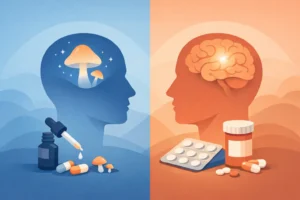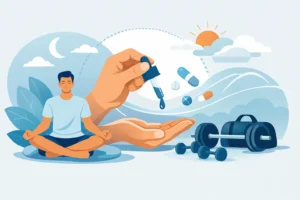
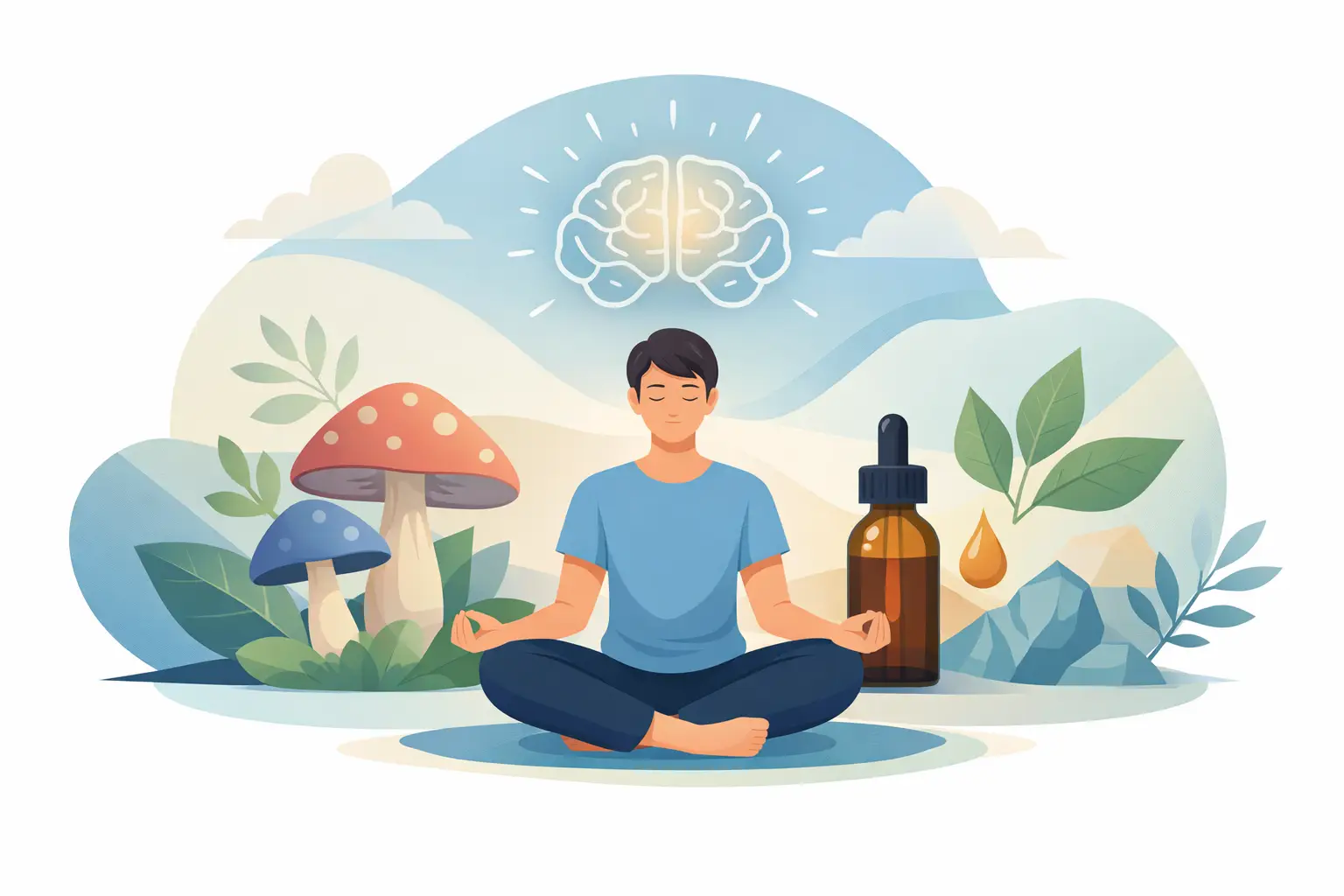
When anxiety starts running your day, polite wellness advice can feel thin. Breathing apps, early nights, another supplement – sometimes none of it touches the loop in your chest or the noise in your head. That is why more people are looking at anxiety relief psychedelic options, not as a trend, but as a serious alternative for emotional reset, perspective change, and a different relationship with fear.
This space attracts people who are tired of forcing themselves through the same patterns. Some want a gentler lift through microdosing. Others are drawn to a deeper journey that can shake loose buried tension, grief, or repetitive thinking. The appeal is obvious, but the truth is not one-size-fits-all. Different compounds create different experiences, and what feels healing for one person can feel far too intense for another.
How anxiety relief psychedelic options actually differ
The biggest mistake people make is treating all psychedelics as if they do the same job. They do not. Some are more suited to subtle day-to-day support. Some are far more immersive and confrontational. Some can feel emotionally warm, while others are psychologically expansive in a way that may help or may briefly amplify anxiety before relief arrives.
Psilocybin is often the first compound people consider for anxiety support. There is a reason for that. Many users describe it as emotionally intelligent. It can bring up what has been avoided, but often with a sense of meaning rather than pure chaos. At lower doses, psilocybin is commonly used in microdosing routines for mood, creativity, and softer social ease. At higher doses, it can become a full inward journey that reframes fear, control, and emotional pain.
LSD sits in a slightly different lane. It is often described as more stimulating, more cerebral, and longer-lasting. For some people, that sharpness is useful. It can create mental clarity, pattern recognition, and a renewed sense of momentum. For others, especially if anxiety already shows up as racing thoughts, LSD may feel too activating unless dose, setting, and mindset are managed carefully.
DMT is in another category entirely. It is fast, intense, and rarely the first choice for someone simply looking to take the edge off. People interested in DMT are usually seeking radical perspective shifts rather than subtle symptom support. That does not make it wrong, but it does mean it is not the obvious entry point for anxious beginners.
Mescaline tends to be experienced as more spacious and heart-led, though it also lasts a long time. Some people who find psilocybin emotionally heavy or LSD too electric are drawn to mescaline for its steady, open quality. MDMA is not a classic psychedelic, but it often enters this conversation because of its reputation for reducing fear around difficult emotions. For anxiety rooted in trauma, shame, or guardedness, that matters.
Psilocybin for anxiety relief
If one option leads the conversation around anxiety relief psychedelic options, it is psilocybin. The appeal is not just the trip itself. It is the after-effect people report – a loosening of mental rigidity, a softer inner voice, a feeling that life is not pressing quite so hard against the ribs.
Microdosing psilocybin attracts people who want support without stepping out of ordinary life. The idea is simple: a sub-perceptual amount taken on a structured schedule, often paired with journalling, better sleep, and intention. The hope is not to feel high. The aim is to feel slightly less trapped in habitual stress, overthinking, and emotional flatness.
That said, microdosing is not magic. Some people notice calmer mornings and better patience within a week or two. Others feel almost nothing. Some feel a mild lift at first, then realise lifestyle factors still need work. It can be useful, but it is often best seen as part of a larger reset rather than a shortcut.
A full psilocybin journey is a different proposition. This is where people often report the deepest breakthroughs, but also the greatest unpredictability. Anxiety can surface strongly during the experience before it shifts. That is not necessarily failure. Sometimes the nervous system stops fighting itself only after the fear has been fully felt. Still, that process is not easy, and preparation matters.
Microdosing versus full journeys
If your anxiety shows up as constant low-grade tension, social unease, or emotional dullness, microdosing may be the cleaner starting point. It allows you to test sensitivity, establish rhythm, and stay anchored in daily life. If your anxiety feels tied to deeper grief, control issues, or long-standing patterns that talk therapy has not touched, a larger guided or carefully planned experience may be what creates movement.
The trade-off is obvious. Microdosing is gentler but often slower and subtler. A full journey may be more transformative, but it asks more from you before, during, and after.
LSD, MDMA and other routes worth considering
LSD can work well for people who want less emotional fog and more mental reorganisation. Some users find that low doses or carefully managed microdoses help them break repetitive loops and engage with life more actively. Yet because LSD can be mentally bright and physically energising, it is not ideal for everyone with anxiety. If you are already overstimulated, it may sharpen what you are trying to calm.
MDMA is often valued for a different reason. Rather than opening the doors of perception in the classic psychedelic sense, it can create a temporary state of emotional safety. That can be powerful for people whose anxiety is built around fear of vulnerability, relational pain, or traumatic memory. In the right context, it may allow difficult material to be processed without the usual wall of panic or shutdown.
Mescaline remains more niche but deserves attention. People often describe it as gentle in spirit even when physically demanding because of its long duration. It can feel grounded, connected, and less jagged than some alternatives. For anxiety tied to disconnection or loss of meaning, that tone may matter.
DMT, by contrast, is less about gradual support and more about rupture. Some people emerge with dramatically altered perspectives on fear and existence. Others simply find it too abrupt to integrate well. For most anxious newcomers, it is not the first sensible experiment.
What makes a psychedelic experience calming or chaotic
The compound matters, but the surrounding conditions matter just as much. Anxiety is highly sensitive to context. The same dose can feel liberating in one environment and overwhelming in another.
Set and setting are not clichés. They are the difference between surrender and resistance. Your mindset, intention, physical environment, music, company, and timing all shape the experience. If you go in scattered, sleep-deprived, or secretly hoping the substance will do all the emotional work for you, the journey may feel rougher than expected.
Integration is where many people either gain long-term relief or lose the thread entirely. A powerful experience can show you a new way of relating to fear, but if you return immediately to the same stress, same habits, and same self-talk, the window may close quickly. Journalling, rest, therapy, meditation, and honest reflection are not glamorous, but they help turn insight into change.
Choosing from anxiety relief psychedelic options wisely
Start with the real question: what kind of anxiety are you dealing with? If it is chronic background stress, low mood, and emotional stagnation, psilocybin microdosing may be the most approachable place to begin. If it is trauma-linked fear or relational shutdown, MDMA may feel more relevant. If your issue is rigid overthinking and mental loops, LSD may appeal, though it needs more caution in anxious profiles.
Dose matters more than bravado. More is not better. People chasing instant transformation often overshoot and end up fighting the experience. Lower, intentional experimentation tends to teach you far more than trying to force a breakthrough.
It also helps to be honest about readiness. If your life is chaotic, your sleep is broken, or you are in acute crisis, a psychedelic experience may not provide the stability you imagine. These substances can open doors, but they do not automatically build the floor beneath your feet.
For those drawn to a structured path, brands such as Lysericmeds.shop speak directly to that desire for access, experimentation, and inner change. The attraction is understandable. People want options that feel intentional rather than clinical or lifeless. But whichever route calls to you, your strongest move is still discernment. Match the substance to the outcome you actually want, not the fantasy of a perfect fix.
Anxiety often shrinks life by inches before you notice what it has taken. The right psychedelic option, used thoughtfully, may help widen the frame again – not by erasing every hard feeling, but by reminding you that fear is not the whole story.